The EYFS programme at The Benalmádena International College focuses on children’s holistic development from birth to five years of age. This methodology promotes effective learning through play and interaction within a safe and welcoming environment. Throughout this article, we will explore the key features of the EYFS system, the methodology applied, the developmental stages, and the importance of collaboration between parents and educators at our school.
Essential features of the EYFS system at The Benalmádena International College
The EYFS system at The Benalmádena International College is designed to provide a comprehensive approach to children’s learning and development. It is based on principles that support an education tailored to individual needs.
Core principles that guide learning
The principles of EYFS are pillars that ensure an optimal learning environment. These include:
- A safe and stimulating environment.
- The importance of play in learning.
- Meaningful relationships between educators and pupils.
- A focus on children’s emotional and social wellbeing.
Key areas of child development according to EYFS
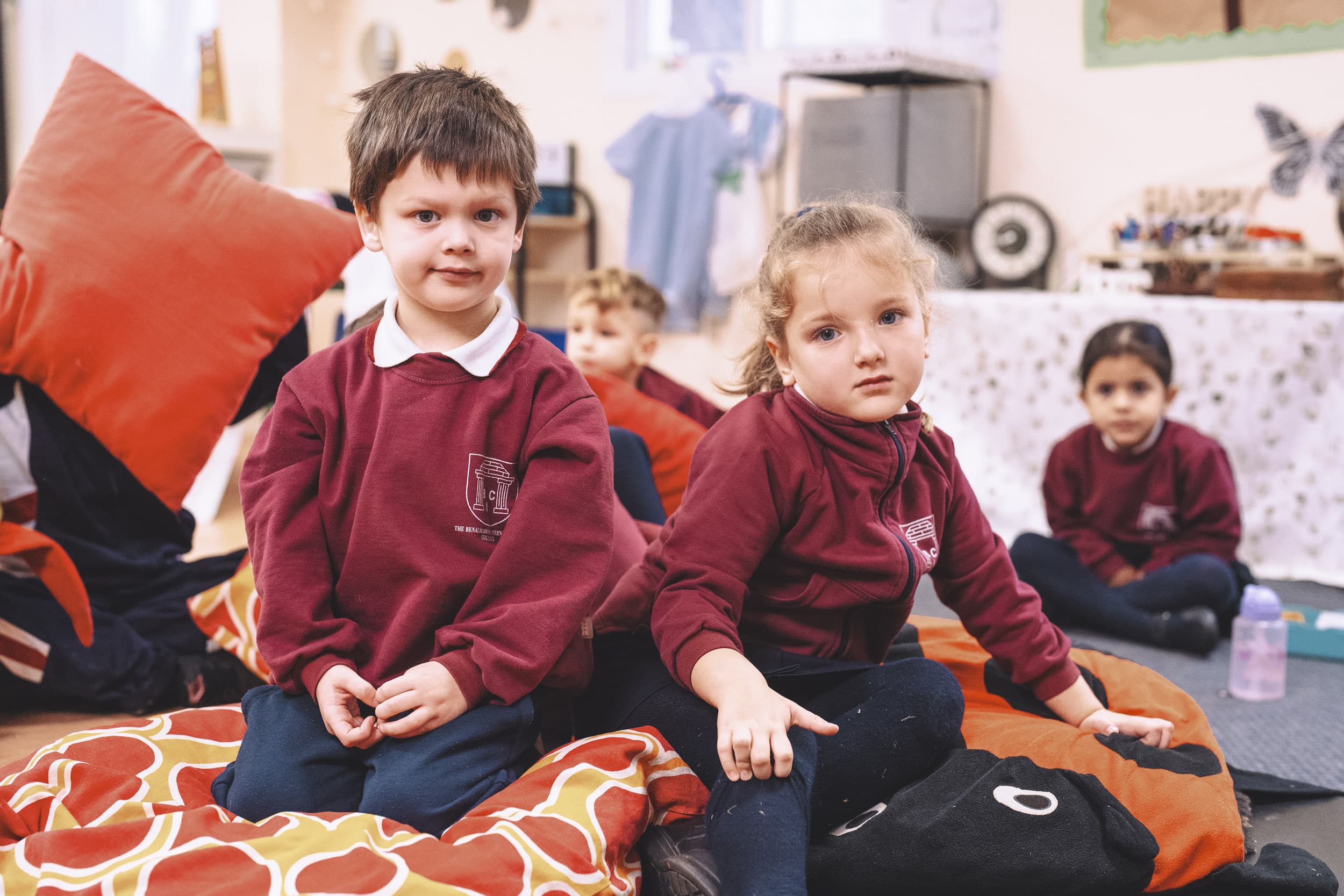
The EYFS framework highlights seven fundamental areas that educators must promote:
- Communication and language.
- Personal, social and emotional development.
- Physical development.
- Reading and writing.
- Mathematics.
- Understanding of the world.
- Play and creative exploration.
Recent updates and their impact on the educational process
Since 2021, EYFS has introduced updates with the aim of modernising teaching. These changes seek to improve the accessibility and effectiveness of learning, adapting to children’s current needs. With these improvements, a more inclusive approach is strengthened, enabling each child to reach their full potential within the school environment.
Methodology applied in EYFS to support children’s progress
The EYFS methodology is based on principles that facilitate children’s learning and development in a stimulating environment.
Parents who want to know more about how this looks in our classrooms can explore our Preschool / Early Years stage.
Learning through play: importance and application
Play is fundamental within the EYFS educational process. Through play-based activities, children develop social, emotional and cognitive skills. This approach makes learning meaningful and relevant, as children explore the world around them.
Projects and practical activities in the classroom
Projects are implemented that allow children to investigate topics of interest. These activities are highly motivating and encourage active learning. Educators set challenges that stimulate children’s curiosity, supporting their engagement in learning.
Personalised adaptation and differentiated teaching
Differentiating teaching is key to meeting each child’s needs. The methodology is adjusted to ensure all pupils progress at their own pace, recognising their strengths and areas for improvement.
How to identify an individual learning pace
To adapt teaching, it is essential to observe each child’s development closely. Their interests and abilities are assessed, enabling personalised interventions that support learning.
Strategies to address diversity in the classroom
- Use a range of resources to support different learning styles.
- Implement group activities that promote collaboration.
- Provide additional time and individualised support when necessary.
If you would like your child to experience this kind of play-based, project-driven learning from the very beginning, you can discover more about our Preschool / Early Years stage and how we apply the EYFS in Benalmádena.
Developmental stages and EYFS milestones parents should know
It is essential for parents to understand the developmental stages their children will go through during the early years. Below are the different stages and milestones that mark children’s progress within the EYFS framework.
First year: sensory development and basic skills
During the first year, babies experience rapid growth. Sensory interactions are fundamental to their development. Essential skills are acquired that form the foundation for future learning. Babies use their senses to explore their surroundings and begin to develop basic motor skills.
From 1 to 3 years: early communication and active exploration
At this stage, children begin to develop their communication skills and explore the world around them. This natural curiosity leads them to experiment and learn actively.
First words and symbolic play
From the second year onwards, significant progress is made in communication. Children begin to use their first words and take part in symbolic play, which enriches their imagination and helps them better understand reality.
Development of motor skills and early socialisation
Physical development becomes more evident as children practise motor skills. They add complexity to their play and begin to interact with other children, thereby fostering socialisation and an understanding of interpersonal relationships.
From 3 to 5 years: preparation for primary education
This stage is crucial in preparing children for their transition to primary education. The focus is on developing more complex skills that will be fundamental in their future schooling.
Cognitive and problem-solving skills
Children develop their cognitive abilities by engaging with problems and games that require critical thinking. They learn to solve problems independently, which increases their confidence.
Introduction to reading, writing and basic mathematics
As they approach entry into primary education, children are introduced to the world of reading and writing. They are taught basic mathematical concepts in a playful way, supporting both their understanding and their enthusiasm for learning.
The role of parents in the EYFS process at The Benalmádena International College
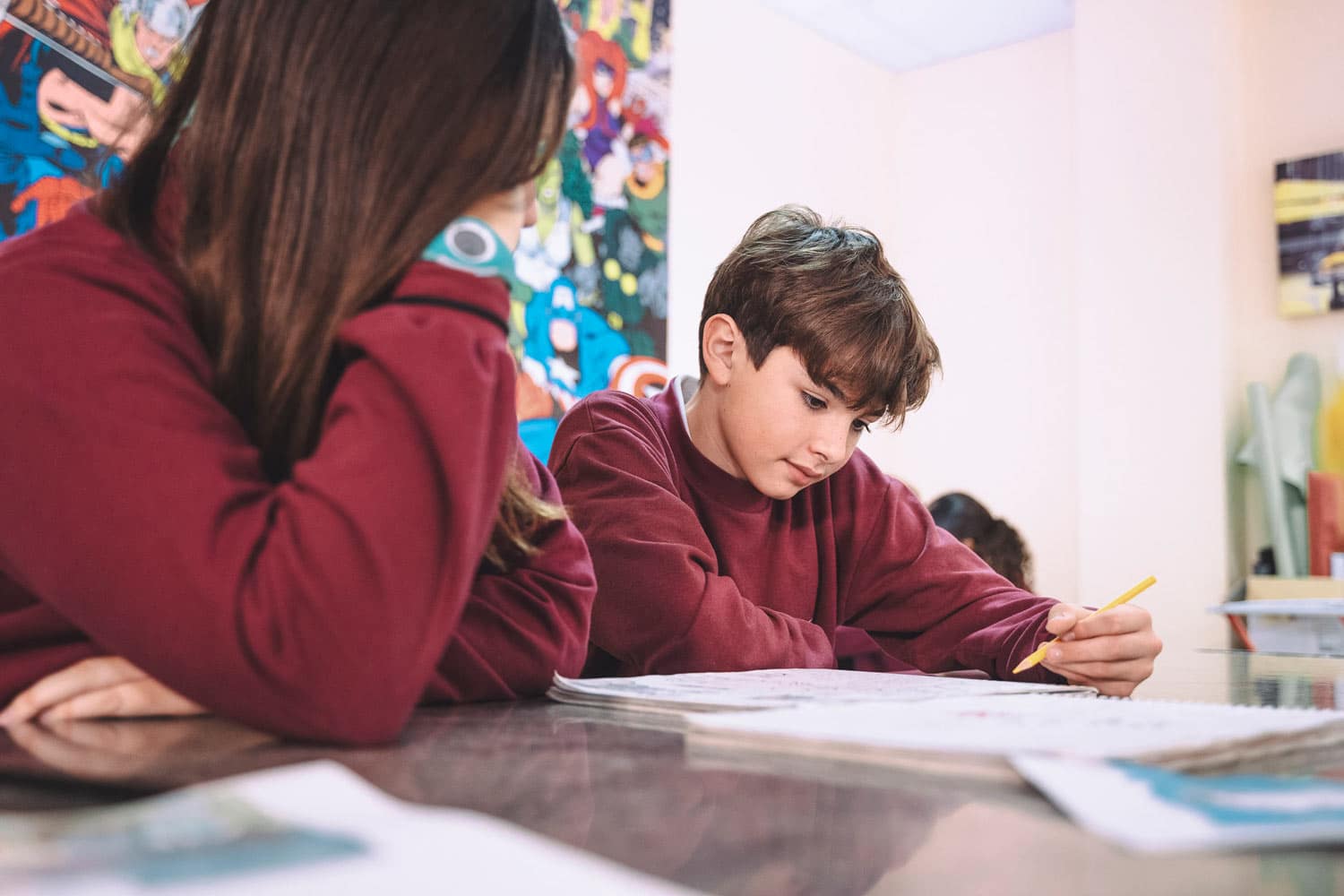
Parents’ active involvement is fundamental to children’s development in the EYFS programme. Their engagement strengthens learning and helps to create an enriching environment both at home and at school.
Encouraging learning at home: practical advice
It is essential for parents to make the most of learning opportunities at home. Everyday activities can be educational.
- Read stimulating books together.
- Encourage curiosity through questions and exploration.
- Incorporate games that develop motor and social skills.
Communication and collaboration with educators
Maintaining regular contact with educators is key to successful learning. Open communication makes it possible to share expectations and concerns.
Participation in meetings and monitoring progress
Attending meetings helps parents stay informed about their child’s development and the activities carried out at school.
Use of resources and activities recommended by the school
Educators provide recommended resources and activities that parents can use at home to complement classroom learning.
The importance of creative play and emotional development
Play is a powerful tool in children’s growth, promoting creativity and social interaction.
Outdoor play and artistic activities
Encouraging outdoor play and artistic activities stimulates imagination and emotional development, allowing children to explore and express themselves.
Emotional and social support during learning
Providing emotional support is crucial so that children feel safe and valued. Emotional connection strengthens the parent–child relationship, benefiting the learning process.
Tools and resources available at The Benalmádena International College to support EYFS
The Benalmádena International College offers a wide variety of tools and resources designed specifically to support learning and development within the EYFS framework.
Educational and technological materials used in the classroom
Resources in our classrooms are adapted to promote an interactive and dynamic learning environment. We use:
- Illustrated storybooks to encourage reading.
- Educational toys that develop motor and cognitive skills.
- Technological tools, such as tablets, to support digital learning.
Complementary programmes to stimulate specific areas
We implement programmes that enrich areas of child development. These programmes include:
- Artistic activities and crafts that foster creativity.
- Physical education sessions that improve motor skills.
- Music lessons to stimulate language and emotional expression.
Training and support for families
The school provides ongoing support to families through:
- Training workshops on child development and the EYFS approach.
- Regular meetings to share progress and strategies.
- Online resources that enable families to engage with learning from home.
Frequently asked questions about EYFS that parents often raise
There are several common questions parents often have regarding the implementation of EYFS at The Benalmádena International College. These queries help to clarify how this educational system is integrated into their child’s experience.
How can I tell whether my child is progressing appropriately?
Children’s progress is monitored through regular observations and informal assessments. Teachers identify developmental milestones and share periodic reports with parents. Ongoing communication between parents and educators is vital to ensure learning expectations are met.
What should we do if we detect delays or difficulties?
If delays are identified, it is recommended to have an open conversation with your child’s educator. The teaching team will offer additional support and propose personalised strategies to help the child. At The Benalmádena International College, attention to individual needs is prioritised.
When is it advisable to start EYFS at The Benalmádena International College?
EYFS can begin from birth up to five years of age. However, it is suggested to start at age three in order to make the most of learning opportunities. Families are informed about the developmental stages and the school curriculum.
If you are considering enrolling your child, we recommend reviewing our step-by-step admissions process.
How are the school’s values integrated into the EYFS methodology?
The values of The Benalmádena International College—such as inclusion, respect and curiosity—are reflected in the EYFS methodology. These principles guide educators in creating an enriching environment that fosters both academic and personal development for each child.
If you feel that our values and EYFS approach match what you want for your child, the next step is simple: review our admissions process and contact our team to book a visit to the school.