Two schools can both say they teach in English and still take pupils down very different paths: a different curriculum, different qualifications and different universities at the end of the road. At The Benalmádena International College, a British school in Spain open since 1997, we see families arrive every year with the same question: bilingual school or British school. This guide compares the two models using criteria you can check for yourself and explains how ours works.
The Difference Between a Bilingual School and a British School
The core difference lies in the education system the school follows. A bilingual school applies the official Spanish curriculum and teaches some subjects in English, while a British school takes the National Curriculum for England as its reference and organises learning in Key Stages, from Early Years to Sixth Form. Neither is better in the abstract, because each one suits families with different plans.
Curriculum and Qualifications
A pupil at a bilingual school finishes with the Spanish ESO and Bachillerato qualifications. A pupil at a British school, on the other hand, prepares for external exams: IGCSEs at the end of Year 11 and A Levels at the end of Sixth Form. We are an approved Pearson Edexcel centre, and you can look through the school’s British curriculum stage by stage.
How English Is Learnt
Many bilingual schools use English in specific subjects, such as science or art. A British school makes it the language in which most of the curriculum is taught, and Spanish remains a subject in its own right. At The BIC lessons are taught in English, and Spanish pupils or those with a good level of Spanish also take some subjects from the Spanish curriculum, including Spanish Language.
Percentage of Hours in English: What to Ask
The figures vary so much from one school to another that it is wise not to rely on a single number. Ask for the weekly timetable for each stage and look at which subjects are taught in English, who teaches them and how much real contact with the language a six-year-old gets compared with a fourteen-year-old.
Bilingual School or British School: Which Suits Your Family
If your child will always study in Spain and you want the most direct route to a Spanish university, a bilingual school is usually the simplest option. For a family that moves between countries, comes from another education system or is considering British or European universities, a British school avoids the culture shock on arrival or departure, because IGCSE and A Level external exams are sat at schools in many countries.
There is also a middle case: Spanish families who want a British curriculum without closing the door on Spanish universities. That is why we teach subjects from the Spanish curriculum to the pupils who need them, so that they can later have their British grades recognised and validated in the Spanish system.
Three questions help you decide: where you think your child will be living at 18, which language is spoken at home and how many years you want them to spend at the same school.
What a British School Is Like on the Inside: Daily Life at The BIC
Stages and Exams
The Benalmádena International College brings together more than 300 pupils of 33 nationalities. They move through Early Years, Primary, Secondary and Sixth Form, where they stop studying many subjects at once and focus on three or four A Levels. They can also take BTECs in Travel & Tourism or in ICT.

Campus, Activities and Dining Hall
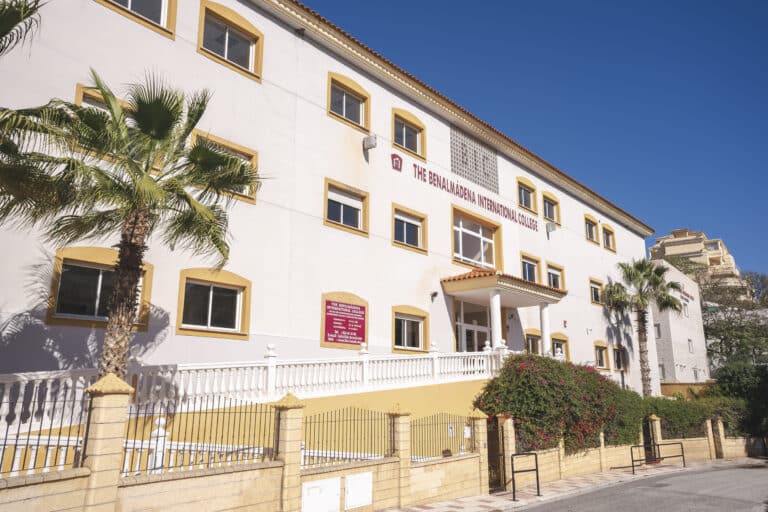
The campus covers 17,500 m² across four buildings, about 300 metres from the beach. Outside school hours there is judo, a football club, basketball, drama, study support and English classes. The dining hall offers a daily menu with several options, and pupils can bring a packed lunch from home if they prefer.
Pupil Wellbeing
The school has an alert and action plan for possible cases of bullying. It is one of the points worth asking about on any visit, whichever school you are considering.
Recognition of Qualifications and School Oversight
Authorisation and Recognition in Spain
The Junta de Andalucía authorised the school to teach the British education system through an order published in the BOJA in 2002. To continue studying in Spain with British grades, the process is handled by the Ministry of Education, Vocational Training and Sport, which manages the recognition and validation of foreign non-university studies through its online office. Requirements depend on each case, so it is worth clarifying them with the school before choosing a year group.
Regular Inspections
British schools abroad can be accredited under the Department for Education’s British Schools Overseas scheme, whose standards are comparable to those of independent schools in England. Along those lines, we receive regular inspections that check we meet the British Standards, and one of them took place in March 2025.
Admissions Process at The Benalmádena International College
The first step is to complete and sign the form in the admissions section, after which the team acknowledges receipt and explains the next steps. In the upper years the pupil’s level is assessed to make sure they will be able to follow the British programme, with additional English support when needed, while in Early Years no prior level is required. Most pupils join in September, although we consider applications during the school year if there are places available.
Frequently Asked Questions About Bilingual and British Schools
What is the difference between a bilingual school and a British school?
A bilingual school follows the Spanish curriculum and teaches some subjects in English. At a British school, which follows the system used in England, English is the main language of instruction and pupils prepare for external exams such as IGCSEs and A Levels.
Can a pupil from a British school study at a Spanish university?
Yes, after having their studies recognised or validated by the Ministry of Education, Vocational Training and Sport. Requirements vary from case to case, so the most sensible step is to check them with the school before deciding.
From what age can children start at The BIC?
Children can join from Early Years and continue through to Sixth Form. To confirm the minimum age for the year group you are interested in, write to the admissions team.
Does my child need to speak English before joining?
No prior level is needed in Early Years, and in the upper years the pupil’s level is assessed to make sure they can follow the programme, with additional English support if needed.
Which official exams do pupils take?
They prepare for IGCSEs at the end of Secondary and A Levels in Sixth Form. At that stage they can also take BTECs in Travel & Tourism or in ICT.
Are Spanish and other languages taught at a British school?
At The BIC, Spanish pupils or those with a good level of Spanish take some subjects from the Spanish curriculum, including Spanish Language. French is also taught.
Talk to Us Before You Decide
Choosing between a bilingual school and a British school is best done with concrete facts rather than brochures. If you are comparing schools, the next step is simple: you can start your application from the admissions section, email us at admissions@bic-benal.com or call us on +34 952 561 666.