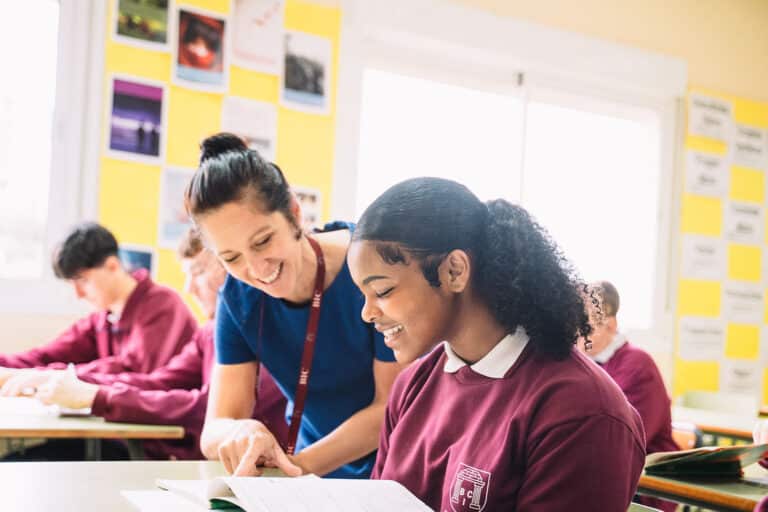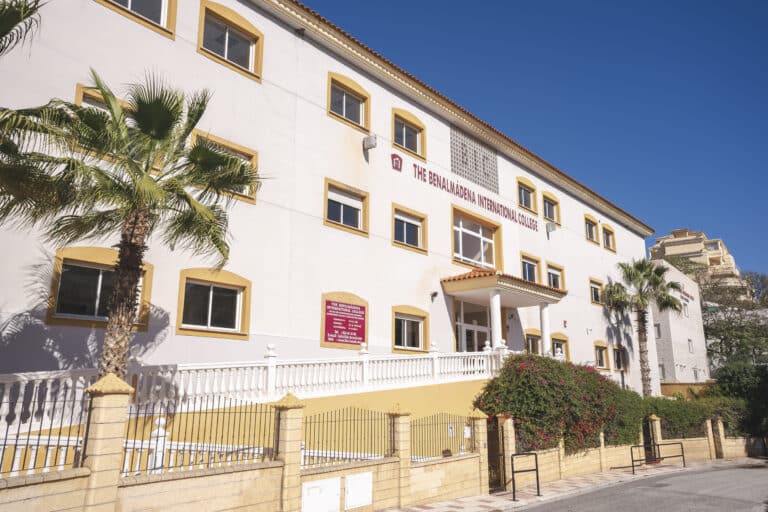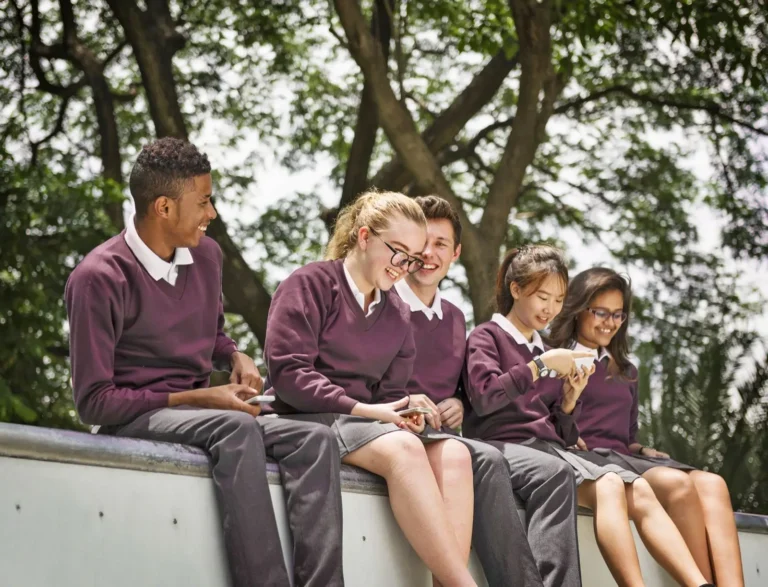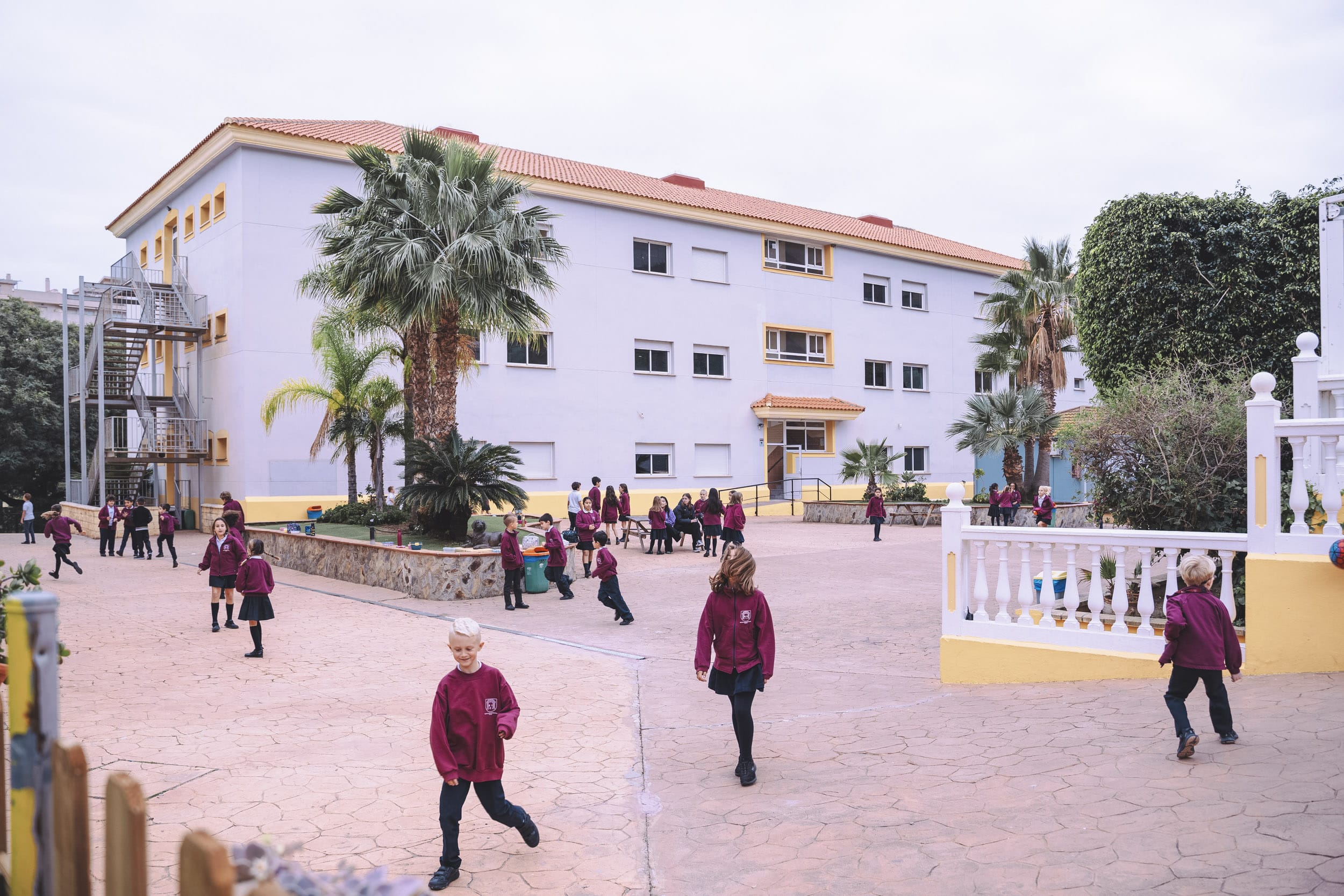
More than 300 pupils from 33 nationalities study side by side at The Benalmádena International College in Benalmádena Costa. For a family newly arrived on the Costa del Sol, that mix offers a clearer picture of what an international school is than any dictionary definition.
The definition still matters, because choosing the wrong education system can set a child back by an entire school year. For families considering a British school, the starting point is the National Curriculum for England, which sets out what is taught at each stage. If you are deciding between the British, American and International Baccalaureate systems, you will find a comparison of their key features below.
What is an international school, and how does it differ from a bilingual school?
Beyond bilingualism: different cultures in the same classroom
An international school is not defined by having campuses in several countries. What sets it apart is an education system with an international reach, recognised beyond the school’s local area, and a pupil community drawn from a wide range of backgrounds.
A local bilingual school will generally teach some subjects in a second language. An international school goes further: pupils learn to work alongside classmates from other cultures, understand different perspectives and move confidently between languages. That experience can matter just as much as their level of English when the time comes to study or work abroad.
English as the language of learning
At a British international school, English is the language of instruction and is also spoken in the playground and dining hall. That does not mean giving up the language spoken at home. A child who maintains their mother tongue while developing English as an academic language will often reach their teenage years with a strong command of both, reflected in the confidence with which they participate in lessons.
Local bilingual schools versus international schools
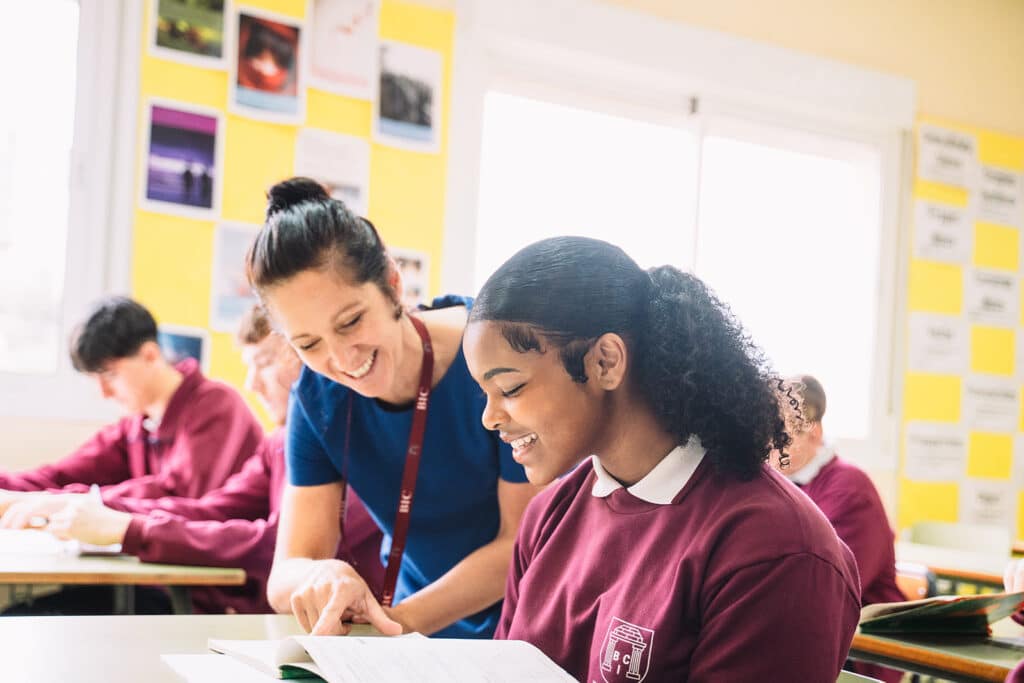
The practical difference lies in the make-up of the pupil community. In a school with children from dozens of nationalities, no one is simply ‘the new foreign pupil’, because many classmates have moved countries themselves. For a child who has just relocated, that can make settling in considerably easier.
Education systems: which is right for your child?
The British system: IGCSEs and A Levels
The British system is based on the National Curriculum for England, with clearly defined stages. Pupils generally begin preparing for IGCSE examinations at 14 and sit them at 16, before moving on to two years of A Level study between the ages of 16 and 18. At The BIC, pupils prepare for Pearson Edexcel International GCSEs.
The defining feature of this system is early specialisation: A Level students study a small number of subjects, usually three, in considerable depth. It suits families seeking continuity with the British education system or considering UK universities, where A Levels are a standard route to entry. At The BIC, our Sixth Form offers both A Levels and BTEC qualifications during these final two years.
The American system: credits and AP courses
The United States does not have a single, rigid national core curriculum. Students earn credits and choose some of their subjects according to their interests. Advanced Placement (AP) courses allow students to demonstrate college-level knowledge in specific subjects, with externally assessed examinations administered by the College Board. It is a flexible approach that can suit pupils with interests spanning different fields, such as engineering alongside art or journalism.
The International Baccalaureate: MYP and Diploma Programme
The International Baccalaureate (IB) offers an educational pathway from primary school through to the age of 18 or 19, with inquiry and critical thinking at its heart. Within this framework, the Middle Years Programme (MYP) bridges the gap between primary education and the Diploma Programme, encouraging connections across different subjects.
The Diploma Programme is a demanding pre-university qualification. Alongside six subjects, it has three core components: the Extended Essay, Theory of Knowledge (TOK) and Creativity, Activity, Service (CAS). It requires independence and sound time-management skills.
How to choose between the three systems
There is no universally best option. A Levels are well suited to pupils who want to specialise and apply to British universities. The American system offers greater scope to combine subjects when a child has varied interests. For families who value inquiry and a broader education before specialising, the IB may be a natural fit. The BIC follows the British curriculum, so if you are leaning towards the American system or the IB, it is worth being clear about that preference before applying for a place.

Community, language and day-to-day wellbeing
An international community of more than 30 nationalities
Diversity becomes a learning experience when it is part of everyday life. Pupils share classrooms with children who speak different languages, celebrate different traditions and see the world in different ways. This daily interaction naturally challenges stereotypes. For a newly arrived family, it is reassuring to meet others who are going through the same experience.
Language support and maintaining the mother tongue
Arriving without a strong command of English need not be a barrier. The BIC accepts pupils with limited English, and the admissions process does not require a specific level of proficiency to access the full curriculum. Each pupil’s home language is respected, while Spanish and French are among the languages taught at the school.
Mental health and emotional wellbeing
Moving country, home and school at the same time can be one of the most stressful experiences for a child. When visiting a school, it is therefore worth looking closely at how pastoral care is organised: who monitors each pupil’s wellbeing, how often tutor meetings take place and how difficulties with settling in are identified. Ask the school team directly and compare the answers you receive.
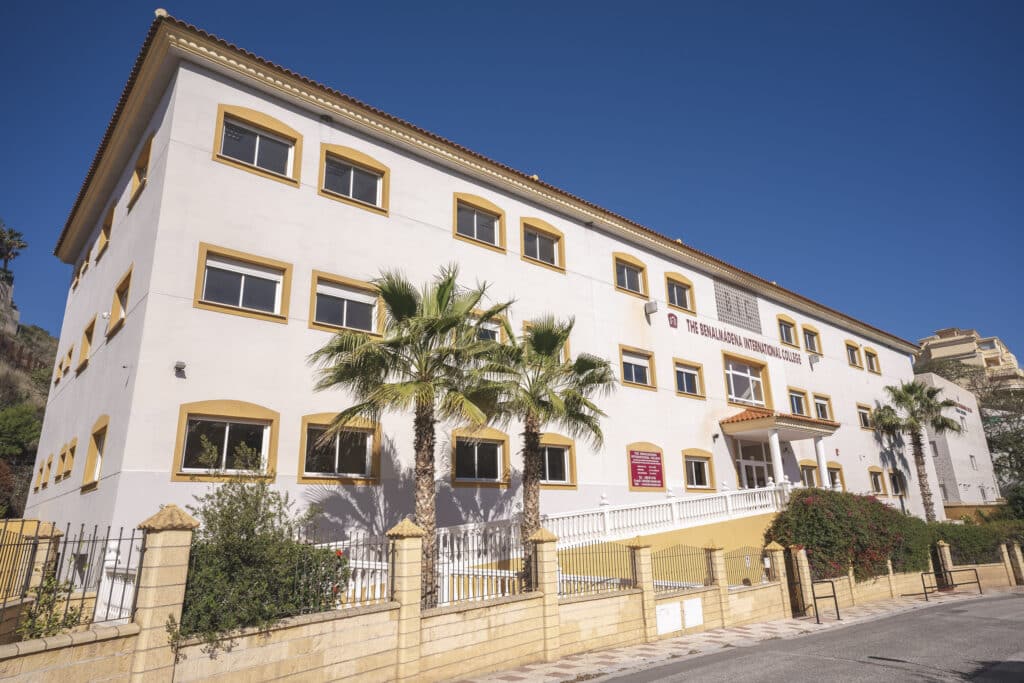
The physical environment matters too. Our campus covers 17,500 m² in Nueva Torrequebrada, with separate buildings for Early Years and Primary pupils and for Secondary pupils, as well as a cafeteria and games room. The local climate also allows children to spend much of the year outdoors.
Activities and projects beyond the classroom
Lessons are only one part of a child’s education. Extracurricular activities in the arts, languages and sport give pupils the opportunity to try new things and discover their strengths. In a school with such a diverse pupil community, these activities also help friendships develop across different groups.
Academic guidance and university entry
Preparation begins well before Sixth Form
University choices are often made at around 17, but the foundations are laid much earlier. At The BIC, we see university preparation as an ongoing process: study habits, time management and independence are developed from the earliest stages. In Sixth Form, A Levels and BTEC qualifications in Travel & Tourism and ICT allow pupils to specialise according to their future plans.
What if your child wants to attend university in Spain?
Many families on the Costa del Sol consider Spanish universities after A Levels. Under the agreement between the UK and Spain, students with A Levels can apply to Spanish universities under the same conditions as students from EU countries, with their qualifications counting for up to 10 points in the admissions system. Applications are handled through UNEDasiss and, in the vast majority of cases, neither formal recognition of qualifications (homologación) nor a Hague Apostille is required. Some highly competitive degree courses have additional entry requirements, so it is important to check each university’s criteria well in advance.
Practical considerations for families arriving for the first time
Admissions: requirements and deadlines
To apply for a place, you will need your child’s birth certificate, passports or identity documents for your child and their parents or guardians, and their vaccination record. A useful tip: keep everything in a digital folder labelled with your child’s name and send it all in a single email.
Every application is considered individually. If your family arrives during the school year, get in touch: we will look at the options available for your child at that time.
School fees: what to ask
Fees vary according to the stage of education, and the admissions team provides the relevant information to each family. Ask what is included and what is charged separately: enrolment fees, meals, transport, examinations, uniform and activities. Having that information to hand makes it much easier to compare schools.
Location
The BIC is on Calle Catamarán, s/n, in Nueva Torrequebrada, between Benalmádena Costa and Fuengirola. Before making a decision, try the journey from your home at rush hour: daily travelling time can have a greater effect on family routines than you might expect.
Academic progress and communication with families
Ask how and how often you will receive updates about your child’s progress, whether through reports, meetings with their form tutor or online platforms. A school that communicates clearly can spot difficulties early and address them before they become more serious.
Frequently asked questions about international schools
What is the difference between an international school and a bilingual school?
A bilingual school teaches part of its curriculum in a second language. An international school offers a curriculum recognised beyond Spain and brings together pupils from many nationalities, making language and cultural diversity part of everyday school life.
Can my child join without speaking English?
Yes. The BIC welcomes pupils with limited English. The admissions team considers each case individually and advises the family accordingly.
Which curriculum does The BIC follow?
The BIC follows the National Curriculum for England from Early Years to Sixth Form, alongside elements of the Spanish curriculum. Secondary pupils prepare for IGCSEs, while Sixth Form students study A Levels and BTEC qualifications.
Can pupils with A Levels attend university in Spain?
Yes. Under the agreement between the UK and Spain, A Levels provide access to Spanish universities on the same terms as for students from EU countries, with an admission score of up to 10 points. Some degree courses have additional requirements.
Can my child join part-way through the school year?
This depends on their stage of education and the places available. Contact the admissions team, who will assess each case individually.
How can I tell whether a British school in Spain meets the required standards?
The BIC undergoes inspections to check that it meets the British Schools Overseas (BSO) standards. When considering any British school abroad, ask when its most recent inspection took place and request a copy of the report.
Take the first step with us
Choosing a school in a new country involves many considerations, but you do not have to make the decision without clear information. If you would like to find out more about The BIC, discuss the right stage for your child or ask when they could join, read our step-by-step admissions guide and get in touch. We will show you around the campus and explain how we work.