
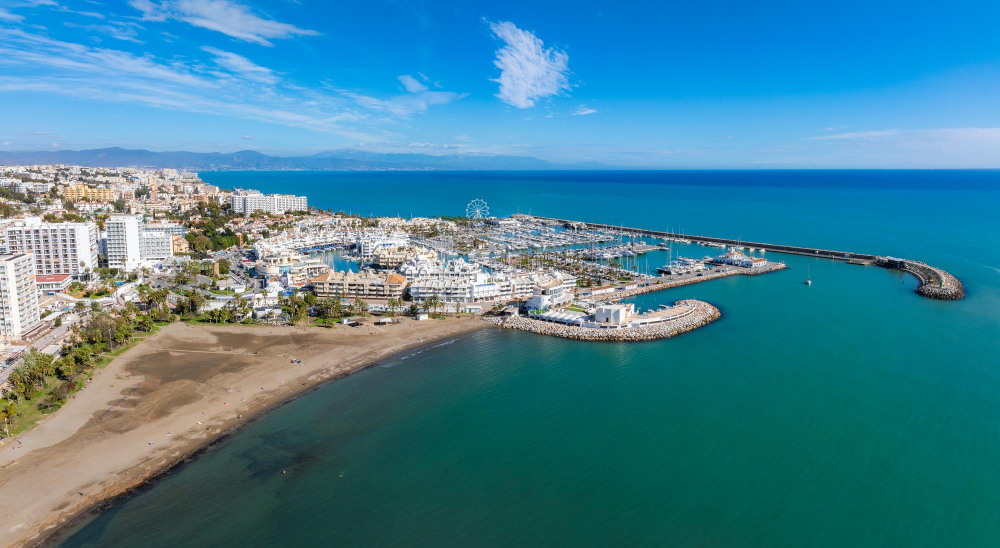
Most families who relocate to the Costa del Sol make the decision based on photos, two-week holidays, and conversations with people who left three years ago.
What they discover once they’re actually here, school run and all. Different rhythms, different trade-offs, different answers to the question of what “quality of life” actually means when you’re raising children in a foreign country.
This guide is for families who are past the daydreaming stage. It covers the towns that consistently work for people with children, what each one offers, and what it costs you in the other direction.
Benalmádena: The Town That Rewards Staying
A lot of families arrive on the Costa del Sol planning to settle in Marbella or Fuengirola and end up in Benalmádena. It tends to happen after a few months of looking around, when the practical calculus starts to override the aspirational one.
The town is divided into three areas that might as well be different places.
Benalmádena Costa is the seafront strip, busy in summer and quiet the rest of the year. The old pueblo sits high in the hills, beautiful and inconvenient. Arroyo de la Miel, the residential and commercial centre, is where most families with school-age children end up: close enough to the coast to use the beach on weekends, with actual infrastructure — supermarkets, a reliable health centre, good road access to Málaga.
The A-7 runs along the coast and puts Málaga city centre about 25 minutes away. The Cercanías commuter train stops at Arroyo de la Miel-Benalmádena, which matters for families where one parent works in the city. It’s the kind of practical detail that sounds minor until you’re living it.
Schooling: The Clearest Advantage
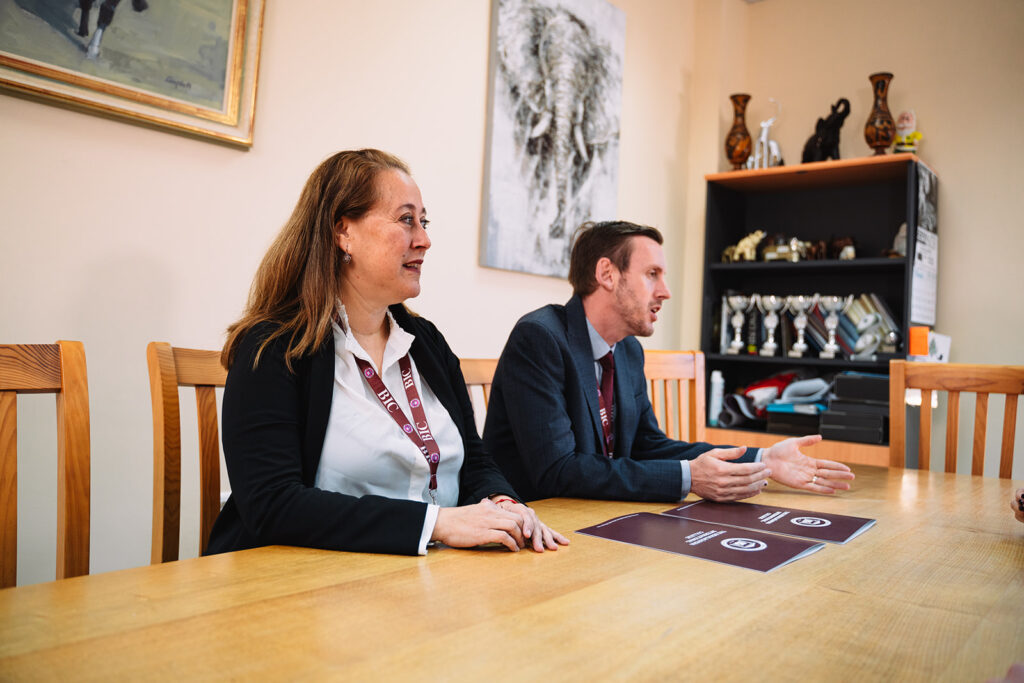
Benalmádena International College is the strongest argument for the town, and families who have done their research know it. Founded in 1997, the school runs from preschool through to A-levels and BTECs under the Pearson Edexcel British curriculum — one of very few schools on the Costa del Sol that covers the full age range in a single site.
That continuity is worth examining carefully. Families who choose a school that only covers primary, or only covers secondary, face a second transition at an already difficult age. At BIC, a child who arrives at three can stay through to eighteen. For families who are uncertain how long they’ll be in Spain, or who are planning to return to the UK at some point, the curriculum alignment with British universities is also straightforward.
The school draws students from over 30 nationalities and holds ISI, BSO, and OFSTED accreditations. Class sizes are smaller than most comparable schools on the coast, which makes a noticeable difference for children who are adjusting to a new country and a new language environment simultaneously.
Among the British-curriculum schools on the Costa del Sol — Aloha College in Nueva Andalucía, The English International College in Marbella, Laude San Pedro International College in San Pedro — BIC is the option closest to the Málaga end of the coast. For families settling between Torremolinos and Fuengirola, the location removes a significant daily commute. Find out what makes BIC different
Places fill up. Contacting the admissions team six months to a year before your planned move is not excessive — and we are experienced in working with families at various stages of the relocation decision.
Life Outside School
Beyond school: the marina at Puerto Benalmádena is worth an evening, the cable car to Calamorro is a good half-day trip, and Tivoli World has been keeping local children occupied for decades. None of it is flashy. That’s rather the point.
The town has enough activity year-round that it doesn’t hollow out in October the way some purely tourist-facing resorts do. That matters more than most families expect before they’ve lived through a Spanish off-season. For a more detailed look at family life in the town, see our guide to discovering Benalmádena with children.
Fuengirola: More Practical Than Its Reputation Suggests
Fuengirola had a bad decade or so for its image among expats, associated with cheap package holidays and a particular kind of British-abroad scene. That reputation is roughly fifteen years behind the current reality.
The promenade has been rebuilt, a food culture that actually reflects where you are in the world has emerged, and the town now has a demographic mix that includes a lot of young international families alongside the longer-established expat community.
The practical case for Fuengirola is strong. It’s more affordable than Marbella, and there’s a train line running between Málaga and Fuengirola that families with children at schools in either direction find very useful.
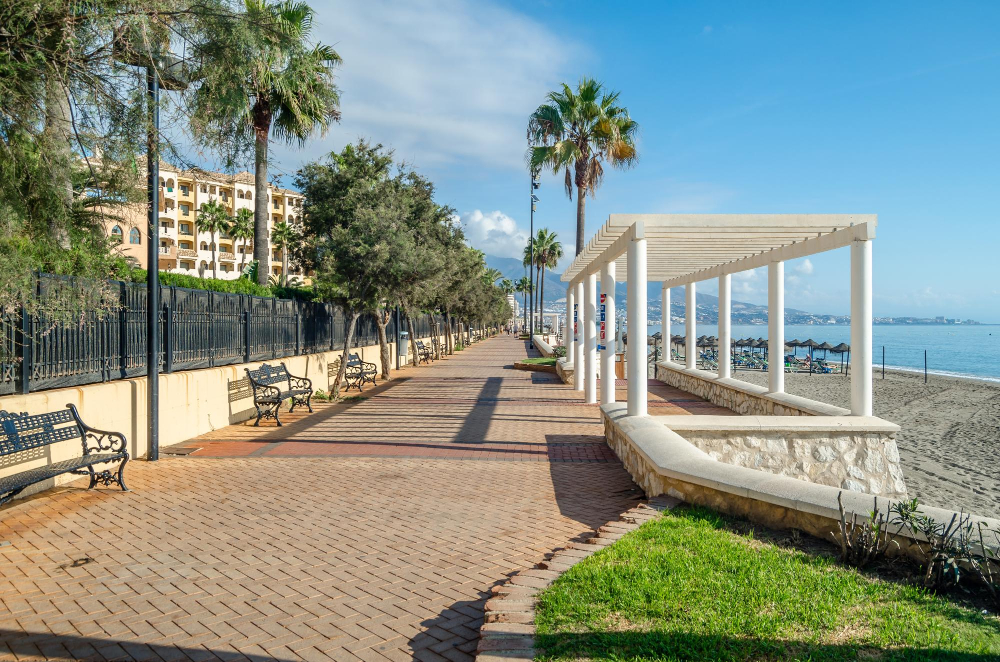
The beach promenade is wide, flat, and long enough that children can cycle or scooter along it independently once they’re old enough.
Bioparc Fuengirola is one of the better zoo experiences in southern Spain, designed around immersive habitats with a serious conservation programme. For families with young children it tends to become a monthly habit rather than a one-off visit. The Castillo de Sohail hosts a medieval festival in summer that draws the whole town and is the kind of community event that helps children feel connected to a place.
The main trade-off relative to Benalmádena or Marbella is character. Fuengirola is functional and increasingly pleasant, but it doesn’t have a strong sense of place in the way the hilltop villages do. For families who care about that, it matters. For families prioritising cost, transport, and beach access, it doesn’t.
Mijas: Two Very Different Propositions
Mijas is a large municipality that contains two experiences so different they probably shouldn’t share a name. Understanding which one you want saves a lot of wasted time.
Mijas Pueblo, the whitewashed hilltop village, is the version most people picture. It’s quiet, architecturally striking, and has a genuine community feel.
The honest caveat: you are up in the hills, a car is non-negotiable for everything, and the school run requires serious logistics. Families who choose the pueblo tend to have remote-working flexibility and prioritise environment over convenience. Some find it transforms their experience of living in Spain. Others find they’ve moved to a beautiful place that’s hard to leave.
Mijas Costa and La Cala are different. Easier access to the A-7, closer to the coast, and with their own growing infrastructure. La Cala in particular has developed into a proper small town with restaurants, shops, and enough of a year-round population to feel like a place rather than a service strip. It attracts a younger international crowd and is more practical for families with school-age children.
The outdoor lifestyle available anywhere in this municipality, hiking, cycling, beach days within 20 minutes, has a measurable effect on children who have come from busier urban environments in northern Europe.
Málaga City: For Families Who Want Urban Life
Málaga has changed considerably in the past decade. It’s now a proper European city with the cultural infrastructure to match: the Picasso Museum, the Centre Pompidou, the Carmen Thyssen, a food scene that has gone from provincial to serious.
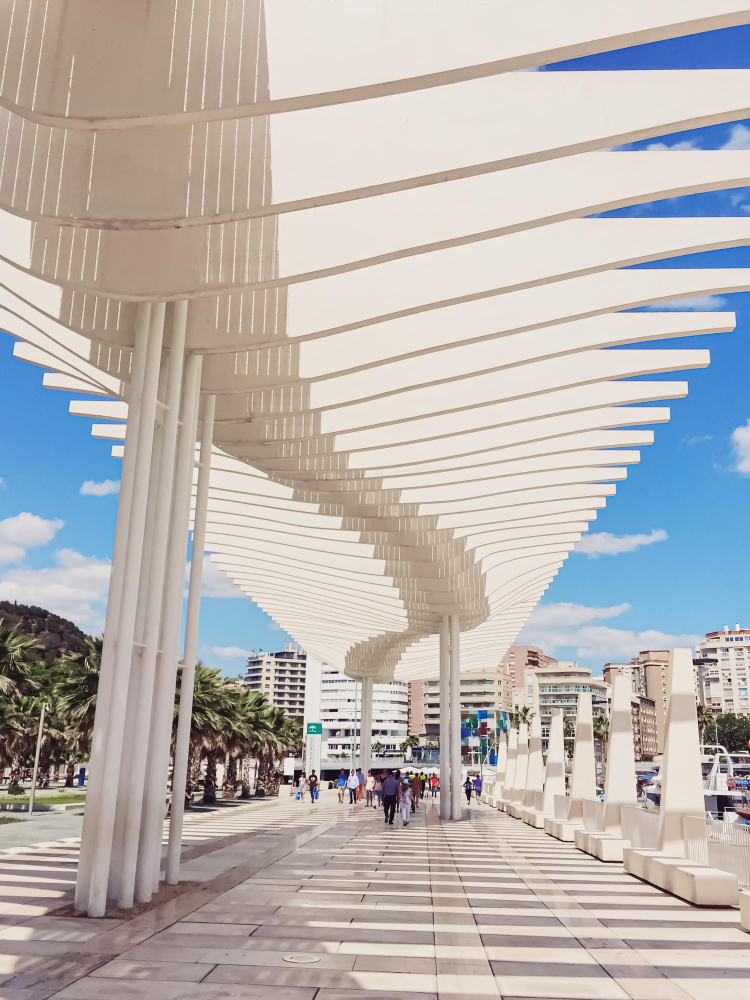
For families relocating from London, Amsterdam, or Stockholm, it offers something the coast towns don’t: the feeling that you haven’t left urban life behind.
The practical case is strong. Public transport works in a way it doesn’t in most coast towns. There are more school options than anywhere else on the coast, including Spanish state schools that are excellent for children young enough to acquire the language naturally. The city park system is well-maintained and used by families year-round.
The trade-off is cost. Rents in the better neighbourhoods (Teatinos, Limonar, El Palo) have risen significantly over the past five years, and the beach, while accessible, isn’t on your doorstep.
Families who work remotely and want urban energy over coastal quiet tend to land here. Families prioritising beach access and lower cost of living tend to end up on the coast.
Quick Comparison: Which Town Works for Your Family?
| Town | British-curriculum school? | Cost of living | Beach access | Best fit |
| Benalmádena | Yes — BIC, preschool to A-levels on one site | Medium | 5 min | Families wanting full British curriculum continuity; Málaga commuters |
| Fuengirola | Shared options; no full-range British school on site | Medium-low | On doorstep | Budget-conscious families; train commuters |
| Mijas Costa / La Cala | Limited international options | Medium | 15 min | Families with younger children; outdoor lifestyle priority |
| Mijas Pueblo | Limited; commute required | Medium | 20–30 min | Remote workers; environment over convenience |
| Málaga City | Most options on the coast; includes state schools | High | 20 min by car | Urban families; remote workers wanting city energy |
Before You Arrive: The Practical Checklist
School places. The better international schools on the Costa del Sol fill up. Benalmádena International College’s admissions team regularly works with families who are mid-relocation and will give you a straight answer about availability and timing. Contact them early; six months in advance is reasonable, a year is better.
NIE. The Número de Identidad de Extranjero is required for opening a bank account, renting, registering with a doctor, and most other formal transactions. You get it at a Comisaría by appointment. The appointment system works, but it takes time. We’ve put together a step-by-step NIE guide with everything you need to know before your appointment.
Empadronamiento. Registering on the local census is required for public services and gives your children access to municipal sports programmes and summer camps at resident rates. Families renting short-term often skip this and then discover they’ve missed the registration window for half the things they wanted.
Healthcare. Public healthcare requires empadronamiento and registration at a centro de salud. Private health insurance (ASISA and Sanitas are the most widely used here) gives faster access to specialists and is often included in relocation packages for families moving for work.
Expat networks. The Costa del Sol has one of the largest established expat communities in Europe. Local Facebook groups, international school parent networks, and organisations like InterNations are useful in the first year, particularly for partners who aren’t working immediately.
Thinking about Benalmádena
Benalmádena International College’s admissions team works with families at every stage of the relocation process — from initial enquiry to first day of school. If you’re weighing up schools alongside where to live, they can give you a straight answer about current availability, year groups, and what to expect from the transition.
Get in touch with the admissions team
Choosing a Town
Renting for six months before buying is standard advice, and it’s worth following. The difference between how a town feels in July and how it feels in February is relevant information that no amount of research replaces.
The families who settle well here tend to share one characteristic: they made the decision about schooling early, then built the rest of the plan around it.
For most families with children of school age, that means figuring out which British-curriculum school works for their children’s ages and their likely location before they’ve signed a rental contract. Everything else adjusts more easily than that does.
Frequently Asked Questions
What is the best area to live on the Costa del Sol for expat families?
It depends on your priorities. Benalmádena offers the strongest combination of British-curriculum schooling, practical infrastructure, and coast access for families with school-age children. Fuengirola suits families on tighter budgets or with good transport needs. Málaga city works best for families who want urban life and don’t mind being 20 minutes from the beach.
Are there British schools on the Costa del Sol?
Yes. The main British-curriculum schools are Benalmádena International College (Benalmádena), Aloha College (Nueva Andalucía), The English International College (Marbella), and Laude San Pedro International College (San Pedro de Alcántara). BIC is one of the few covering the full age range from preschool to sixth form on a single site.
Is Benalmádena a good place to live for families?
For families with school-age children, yes. The town has solid year-round infrastructure, direct train access to Málaga, and is home to one of the best-regarded British schools on the coast. It avoids the extreme tourist density of Torremolinos and the higher costs of Marbella.
How much does it cost to live in Benalmádena?
Broadly mid-range for the Costa del Sol. Rental prices for a three-bedroom flat in Arroyo de la Miel typically run between €1,200 and €1,800 per month depending on size and proximity to the coast (figures as of early 2026). Grocery and utility costs are lower than equivalent UK costs in most categories.
Do I need to speak Spanish to live on the Costa del Sol?
Day-to-day life in most expat-established towns is manageable without Spanish, particularly in Benalmádena, Fuengirola, and Marbella. That said, children who acquire Spanish — which happens quickly in an immersive environment — will have a considerably wider social life and a meaningful advantage if the family stays long-term. Schools like BIC provide support for children joining mid-year without Spanish.
How early should I apply to an international school on the Costa del Sol?
For schools like Benalmádena International College, six months to a year before your planned arrival is a reasonable lead time. Popular year groups fill faster than others. If your move date is flexible, contacting the admissions team early lets you align your timeline with available places rather than the other way round. See our step-by-step admissions guide for the full process.